
Welcome to Wood Campus
The UK timber industry’s free online information portal. Whether you’re a specifier, builder, working in a builders’ merchant, or into DIY, we have the information, inspiration and learning tools you need to use more wood and reduce CO2 emissions.
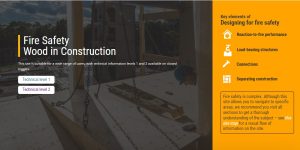 The timber industry has launched a comprehensive new fire safety website: Fire Safety. Wood in Construction. Giving users a single point of access to information and guidance on this multi-faceted and safety-critical subject, it is designed for all construction professionals and is available free.
DIY & Self-Build
Get working with wood. Guides and a growing list of inspirational projects.

Architects’ & Designers’ CPD
For architects, interior designers and specifiers. Free and certificated CPD courses without registration.

Timber Trade Topics
Free guides for users and suppliers of timber products. Specialist timbers, treatments, cladding, usage and regulations. Also, an Award in Timber Merchanting course.

Sustainable Building
Information on how building with renewable, low-carbon, timber can reduce the global heating effect of development.
Timber in Construction Masterclasses
Because timber is such a significant part of building a sustainable future in the UK and globally, we invited a range of experts to share their thoughts on the main reasons why we should be building more with timber.
Timber in Construction Masterclasses
Because timber is such a significant part of building a sustainable future in the UK and globally, we invited a range of experts to share their thoughts on the main reasons why we should be building more with timber.
Publications
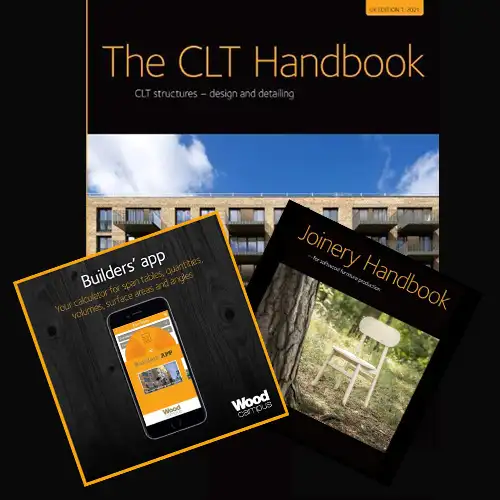
Joinery Handbook, Span Tables, CLT Handbook, Treated Timber Guide and even a Builders’ App. All free resources to download or use online so that you are ready for business anywhere.

DIY Projects and Guidance
Wood Campus provides inspiration, information and instruction about wood and building in wood. Simple ways to make your home and garden more beautiful and sustainable.

Building with Wood
Free RIBA-accredited online CPD courses covering the key products and techniques in timber construction.
Plus online and downloadable technical information on designing and detailing CLT structures, joinery and timber structures (see links below).

Builders’ App
Your calculator for span tables, quantities, volumes, surface areas and angles.

Joinery Handbook
A guide aimed at large companies, smaller joinery workshops and students who work in design and production of furniture and fittings, predominantly in softwood.
CLT Handbook
Online version of the new 150-page Swedish Wood Handbook updated for the UK. Downloadable PDF’s available.
Our Blogs & News

Swedish Wood hosts high level event at the Residence of the Ambassador of Sweden to the UK
(left to right, Baroness Hayman of Ullock, Shadow Spokesperson for the Environment, Food and Rural Affairs; Stefan Gullgren, the Ambassador of...
Will Prince William’s Bold Pledge Spark a Timber Boom?
The Prince of Wales has acted on his commitment to build low-carbon social housing on the $1 Billion-plus Dutchy of Cornwall lands.The Prince of...
TDUK releases UK timber product embodied carbon data
Timber Development UK (TDUK) has released average carbon data for the 10 major timber product categories. The data will support architects,...
Our Partners













the UK timber industry’s free
online information portal